
Parenthood Changes So Much. Your Home Can Still Feel Like You.
Becoming a parent changes your world.
Your routines shift. Your priorities move. The things you carry, wear and think about can feel completely different almost overnight.
Your home changes too. Bottles appear on worktops, toys gather beneath chairs and previously quiet rooms become places for crawling, feeding, playing and family life.
At our recent Totter + Tumble x Morris & Co. event, our in-house designer, Kayleigh Flattery, described an experience that will feel familiar to many parents:
“Having had two children myself, you do really lose some of your identity.”
Not every parent experiences this transition in exactly the same way. But amid the new responsibilities, altered routines and visible signs of family life, it is understandable to wonder: where do I fit now?
The conversation returned to the home, not as a space that should remain perfectly preserved, but as somewhere that can evolve with family life while continuing to feel personal.
“Your home is really important, and keeping your home feeling like your home is really important.”
Totter + Tumble Designer, Kayleigh, speaking at the Totter + Tumble x Morris & Co. event
Creating a safe and welcoming space for children should not mean losing the home you worked so carefully to create.
Because a family home can still feel like your home.

Do parents lose their identity after having children?
Many parents feel that their sense of identity changes after having a baby.
This does not always mean losing who you are. More often, it means learning how to recognise yourself within a life that now includes new responsibilities, routines and another person’s needs.
Your clothes may change. Your social life may look different. The contents of your bag almost certainly will. Even your surroundings can begin to feel unfamiliar as practical baby products enter spaces that were once shaped entirely around your own taste.
Some of this change is necessary. Much of it can be joyful. But that does not mean every part of your pre-parent identity needs to disappear.
Your appreciation for colour, pattern, furniture and thoughtful design still matters. Wanting a home that feels calm, considered and beautiful is not trivial. Our surroundings can influence how we feel, particularly during the early years of parenthood, when so much time is spent at home.
The aim is not to preserve your home exactly as it was before children. It is to let it evolve without losing its connection to you.

Good family design considers the whole family
Children need spaces where they can move, explore and play freely. Parents need spaces that remain comfortable, functional and recognisable as their own. These two things do not have to conflict.
The problem arises when products are designed as though only the child will experience them. In reality, baby and children’s products often occupy the most shared parts of the home: kitchens, living rooms and open-plan family spaces.
Good family design should therefore ask more than whether a product performs one immediate function.
It should also ask:
-
Is it comfortable for children and adults?
-
Can it support more than one stage of family life?
-
Is it easy to live with every day?
-
Does it sit naturally within a shared room?
-
Will the family continue to value it?
This is the difference between designing something solely for a child and designing something for family life.
Family products should not force parents to choose between creating a safe place to play and living in a home that still reflects who they are.

Five ways to create a family home that still feels like you
1. Design for connection, not separation
You do not always need a completely separate playroom.
A comfortable area within the living room can give babies and children space to play while allowing everyone to remain connected. It also gives parents somewhere comfortable to join them rather than supervising from the edge of the room.
Play becomes part of family life rather than something contained behind a closed door.
2. Choose fewer products that work harder
Family homes can quickly become crowded when every new stage appears to require another temporary object.
Before bringing something home, ask:
-
Will we use this regularly?
-
Can it serve more than one purpose?
-
Will it work in a shared room?
-
Will we value it beyond one brief stage?
The best family products quietly support everyday life rather than constantly announcing their presence.
3. Keep the things that express who you are
Do not feel obliged to remove every treasured or beautiful object from your home.
Some pieces may need to move to a higher shelf for a while, but keeping art, books, photographs and meaningful objects visible helps your home retain its personality.
A family home should tell the story of everyone who lives there, including you.
4. Work with your existing interior
Look at the colours, materials and patterns already in your home before choosing new family products.
Soft neutrals can create a sense of calm. Nature-inspired tones can connect a play area to wooden furniture, plants and woven textures. Heritage patterns can introduce warmth, depth and character.
Rather than asking whether something looks like a children’s product, ask whether it feels at home in your space.
5. Design for real life, not perfection
A home can be beautiful without being immaculate.
Family homes are busy, hard-working and sometimes very messy. There will be toys on the floor, dishes beside the sink and days when tidying is the least important thing on the list.
The goal is not perfection. It is creating a home that supports the way your family really lives.
Choose wipeable surfaces, practical storage and forgiving materials. Give everyday objects an easy place to belong. Then allow the home to be used.
Beautiful design should make life feel better, not make you afraid to live in it.
Why shared family life begins on the floor
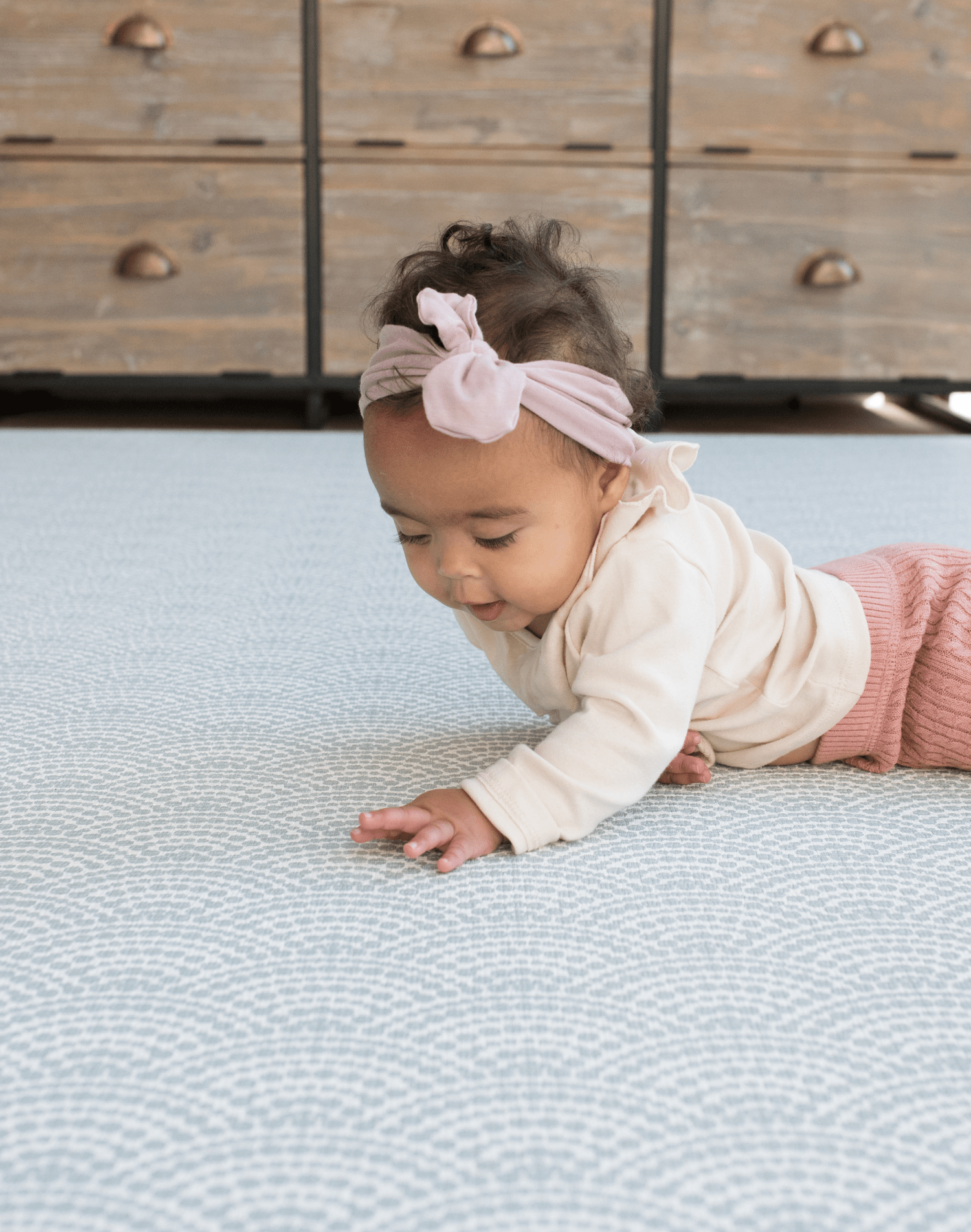
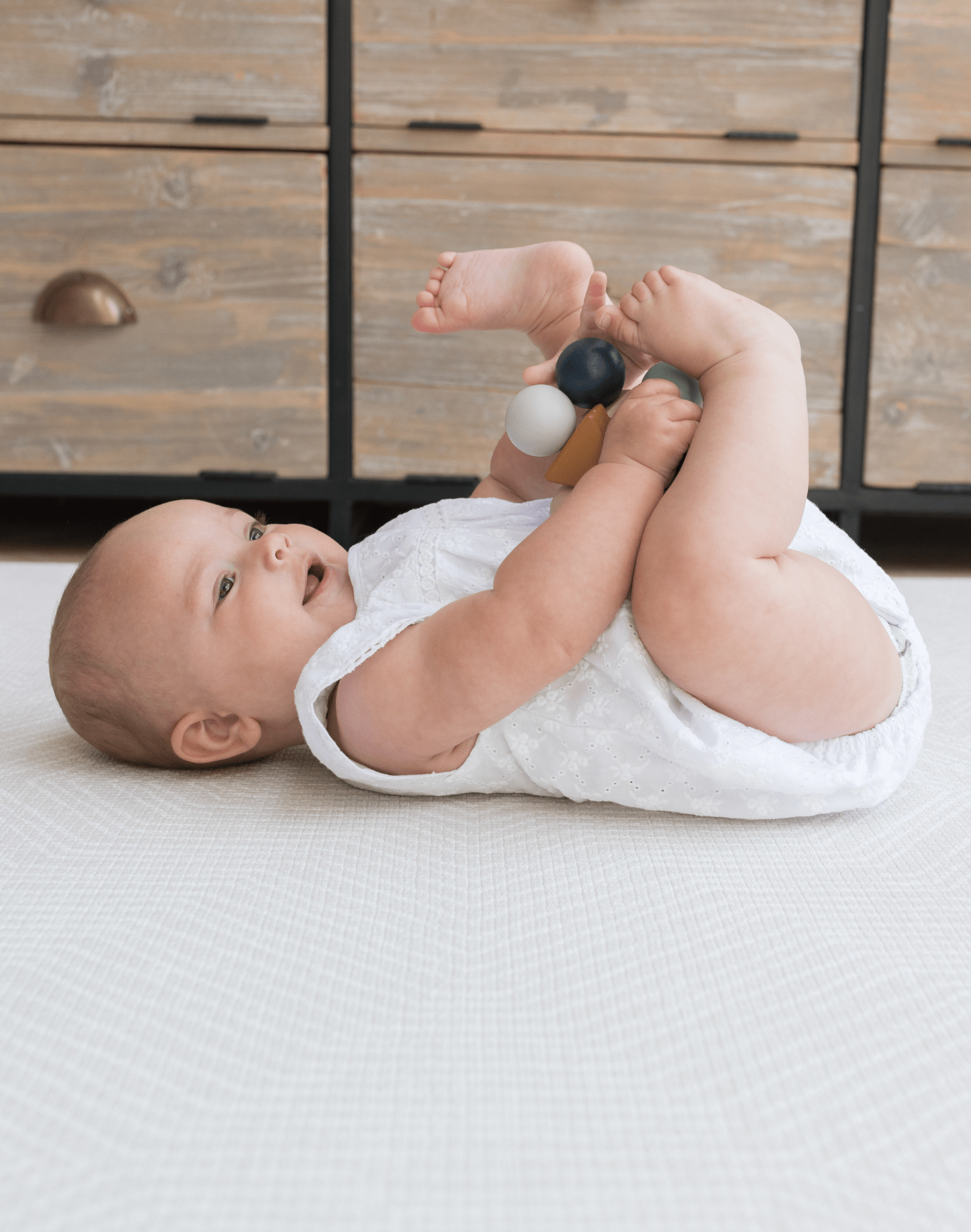
The floor is one of the first places babies begin to experience the world.
It is where they lie, roll, reach, crawl and eventually find their feet. It is also where parents sit beside them, siblings join in and everyday moments of connection unfold.
A supportive floor space can become one of the most versatile places in the home: a place for tummy time in the morning, imaginative play in the afternoon and a family film in the evening.
Comfort matters because it allows everyone to stay there for longer.
When the floor is supportive for adults as well as children, parents are more likely to get down and join in. Play becomes shared rather than observed.
This is why Totter + Tumble playmats are designed as more than temporary baby products.
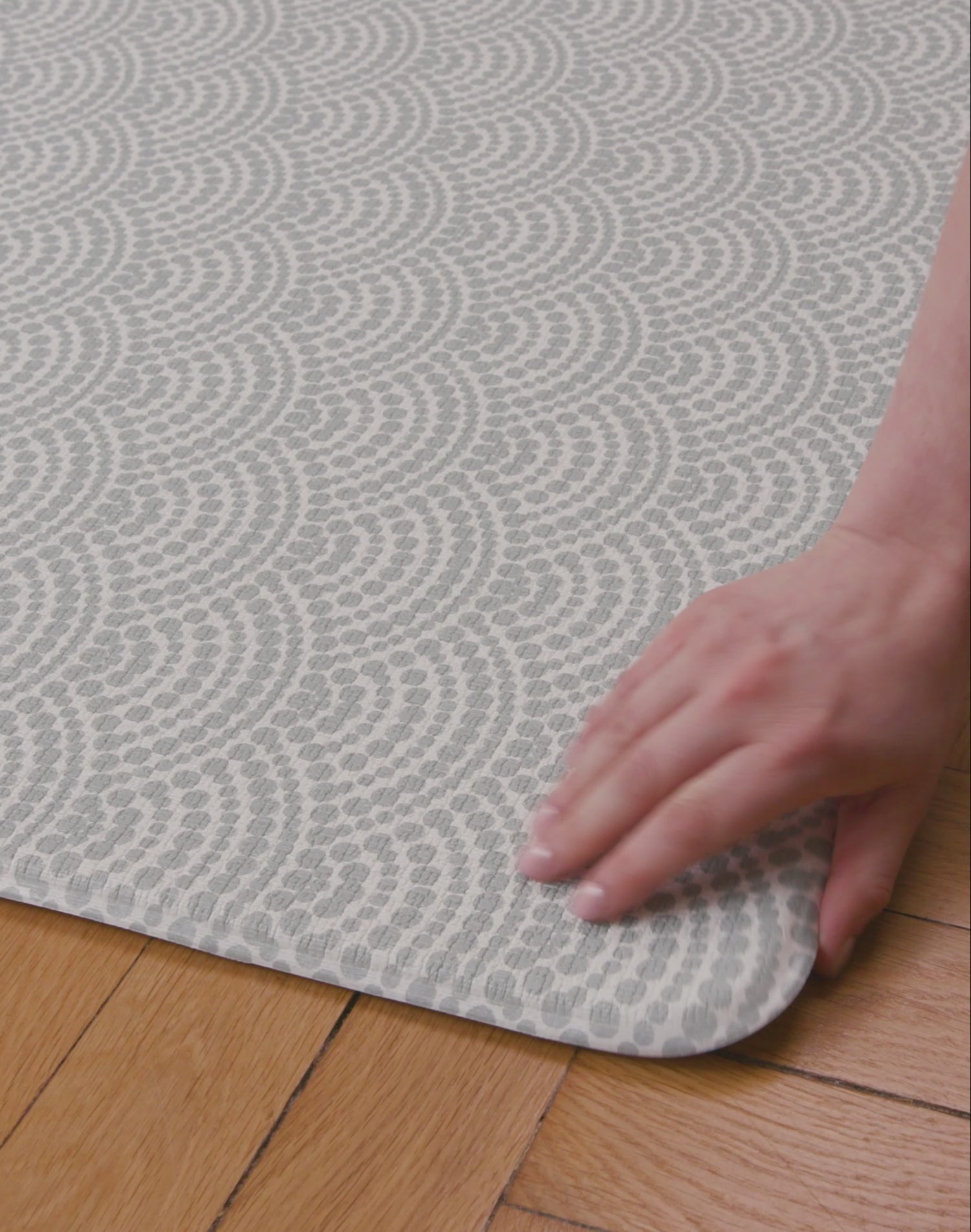
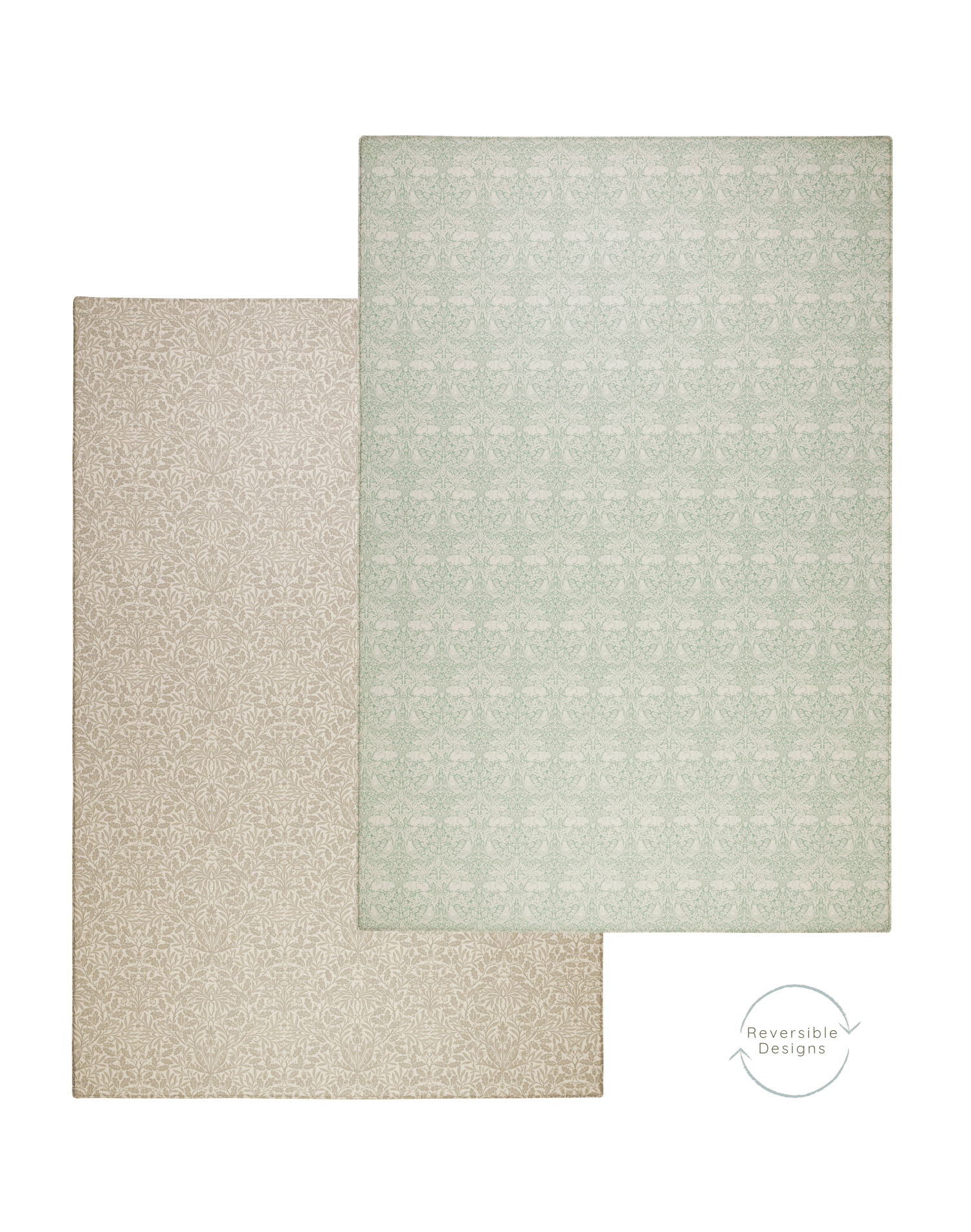
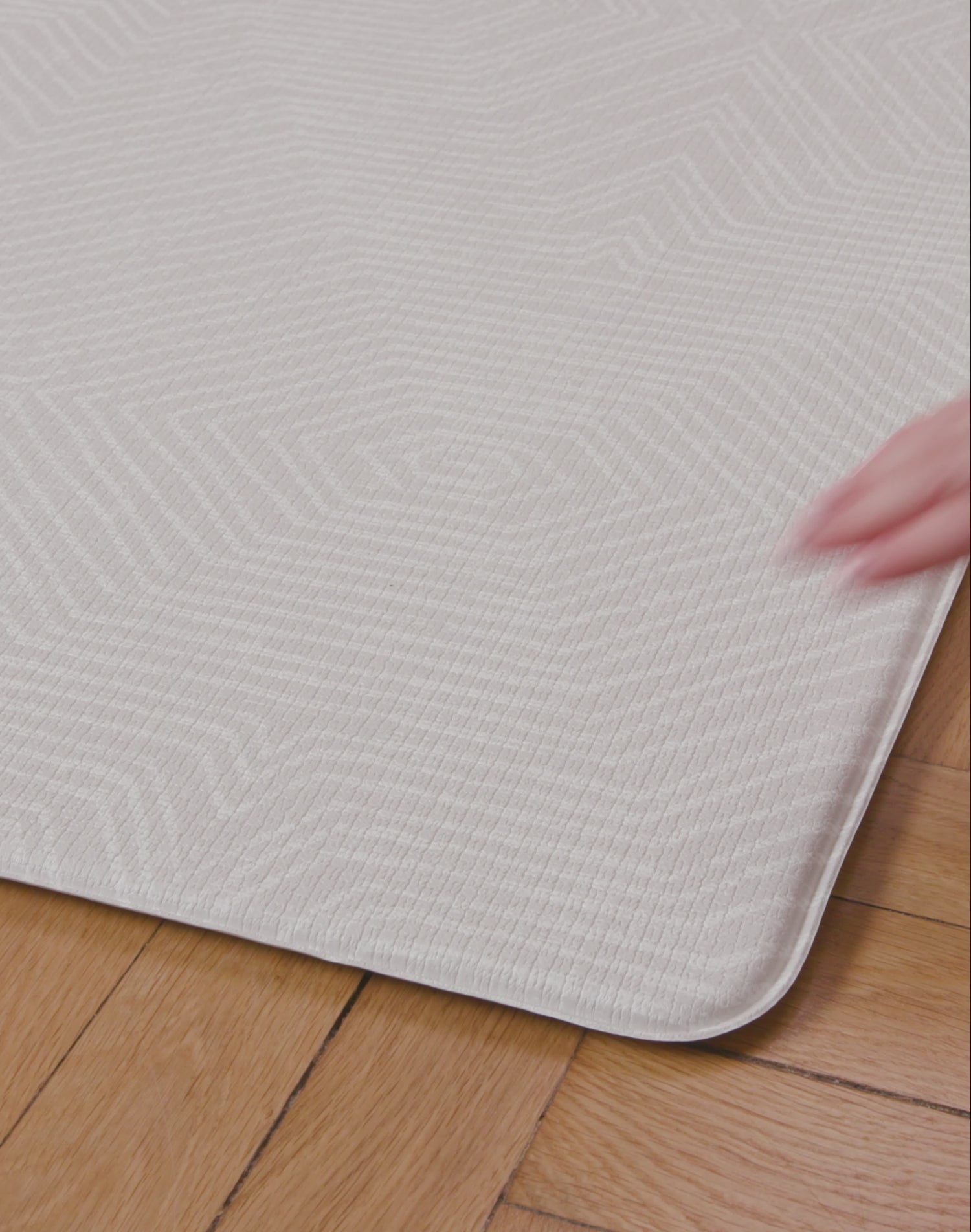
Their memory-foam cushioning supports movement and play while creating a comfortable surface for adults. Their one-piece, wipeable construction is made for everyday family life, while considered, reversible designs allow them to sit naturally within shared interiors.
They are made for children, but they are not designed only for children.
They are places for parents to sit, grandparents to play, babies to roll, toddlers to tumble and grown-ups to stretch, pause or simply spend time together.

What Morris & Co. teaches us about useful and beautiful design
The relationship between beauty and usefulness has long been central to Morris & Co.
That principle feels especially relevant to modern family life, where space is precious and almost every object needs to work hard.
Our collaboration with Morris & Co. brings heritage pattern into the everyday rhythm of the family home. Renowned Arts and Crafts designs are thoughtfully adapted into supportive, practical playmats created for real homes and real routines.
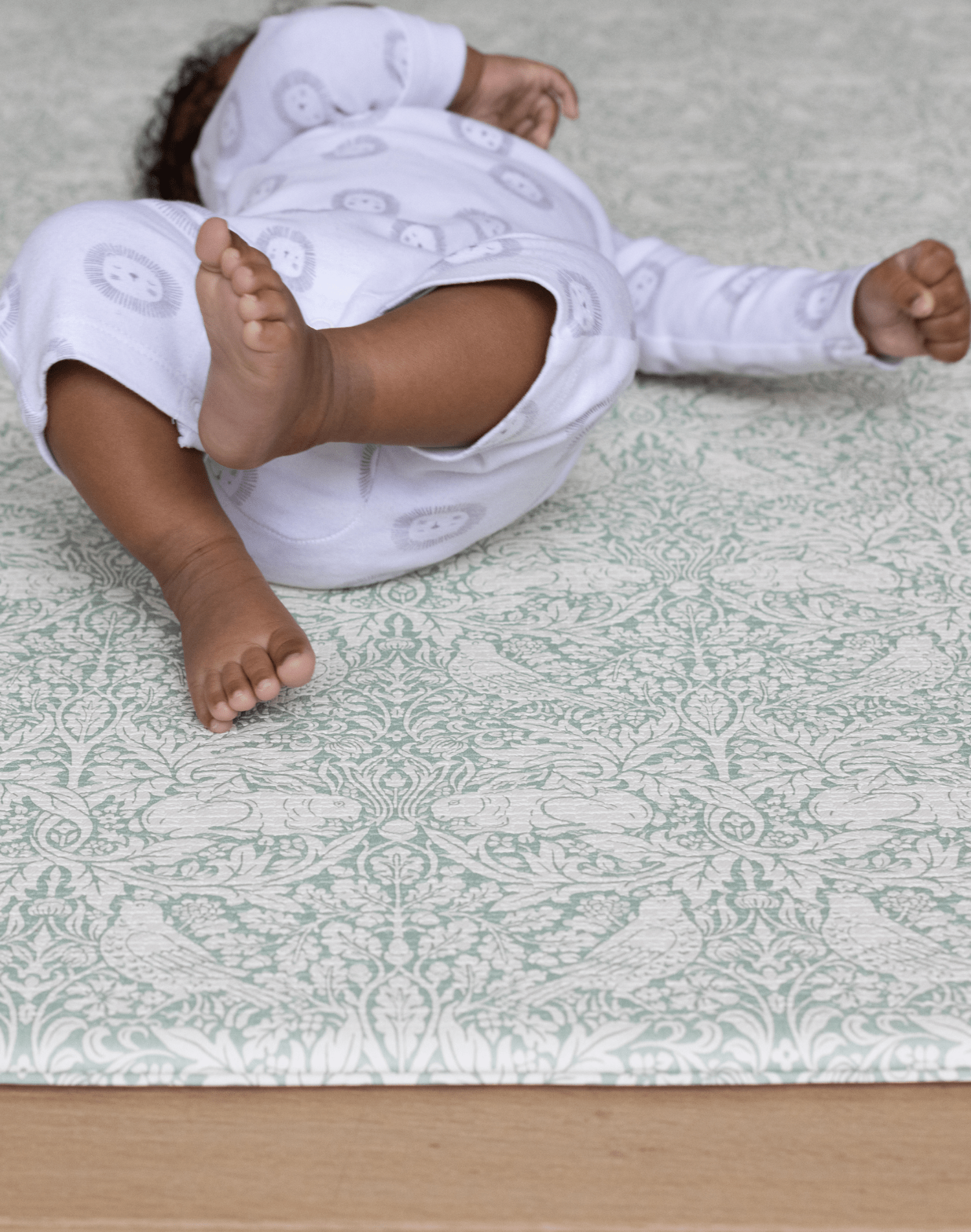
At the centre of the 2026 collection is Bullerswood, inspired by a hand-knotted carpet exhibited by Morris & Co. in 1893.
It has been reimagined as a cushioned, wipeable playmat with a rug-like border: more than a century of design history adapted for contemporary family life.
Bullerswood demonstrates that practical family design does not have to feel temporary or disposable. A piece can carry history, pattern and character while still being ready for cereal spills, muddy footprints and the joyful chaos of raising children.
Beauty and usefulness are not competing qualities. The most thoughtful designs make room for both.

A home for them, for you, for all
Parenthood may change how your home looks, but it should not erase the person you were before.
Your home can hold the toys and the art. The changing bag and the beautiful chair. The baby books and the novels you still plan to finish. It can make room for your child’s developing identity while continuing to express your own.
This is not about hiding family life or preserving a perfect interior. It is about designing for it thoughtfully.
At Totter + Tumble, we believe the best family products belong to everyone in the home. They support the spills, tumbles, play and milestones without asking parents to put their needs or style away until their children are older.
Your home will change. So will you. But it can still feel like you.

Frequently asked questions
How can I create a family home that still feels like me?
Retain meaningful belongings, choose practical products that reflect your personal taste and create shared spaces for adults and children. Your home does not need to remain unchanged, but its new additions should work with your identity rather than replacing it.
Can a family home be both stylish and practical?
Yes. Look for durable, wipeable and versatile pieces that complement your preferred colours and materials. Family-friendly design works best when practicality is built into an object rather than added at the expense of its appearance.
How do I stop children’s things from taking over my home?
Choose fewer, harder-working products and give toys an accessible but defined place to live. Focus on shared spaces that work for adults and children rather than filling every room with separate children’s furniture.
Can a play space still feel sophisticated?
Yes. Treat the play area as part of the wider interior. Choose colours and materials that work with the surrounding room, use considered storage and create a supportive floor space that is comfortable for children and adults.